Skip to content
 0
0What the Heck is Sparkling Tea?
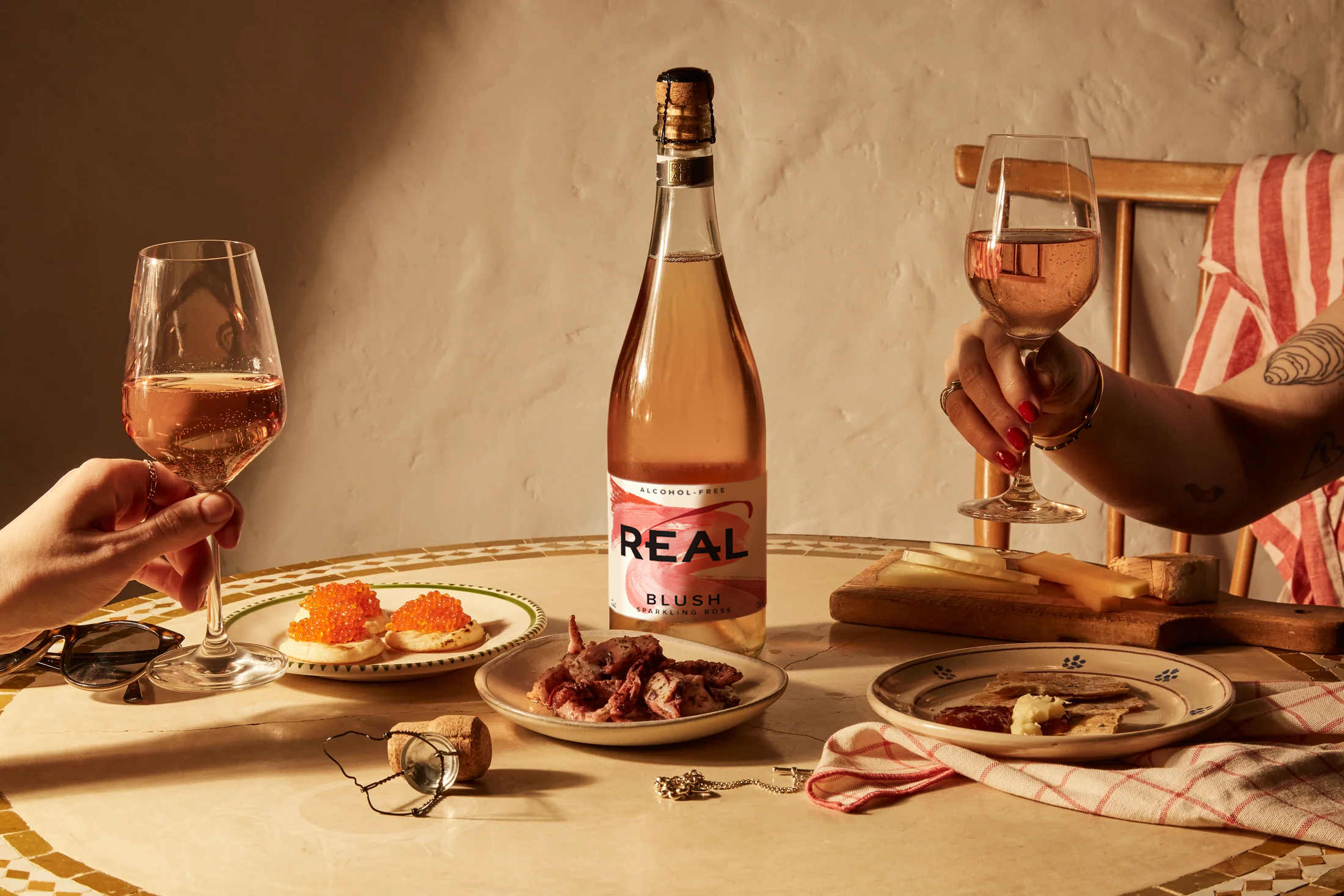
A few years ago, if someone offered you a “sparkling tea”, you’d be forgiven for hesitating.
Tea… but sparkling?
It sounds like a contradiction. Tea is something we know—hot, comforting, familiar. Something you drink without thinking too much about it. Sparkling, on the other hand, suggests something celebratory. Something with structure. Something that belongs at a table, alongside food.
And yet, quietly, sparkling tea has emerged as one of the most interesting categories in modern drinks. Particularly for those who want something alcohol-free, but still complex, layered, and genuinely satisfying to drink.
The challenge is that “sparkling tea” doesn’t describe a single thing.
It describes a spectrum.
And unless you understand that spectrum, it’s hard to understand why one sparkling tea might feel refreshing and simple… while another feels like a drink you can truly savour.
A Category Without Rules
At its most basic level, sparkling tea is exactly what it sounds like: tea with bubbles.
But beyond that, there are no fixed rules. No single method. No shared philosophy.
At one end of the spectrum, you have pure tea, brewed and carbonated.
This is the most stripped-back interpretation. High-quality tea is steeped, chilled, and then carbonated. The result is clean and precise. You taste the tea clearly—its tannins, its aromatics, its natural structure.
But tea, on its own, can be uncompromising. Without anything to soften it, those tannins can feel quite sharp. The experience can be bracing—refreshing, yes, but also quite astringent.
To soften that edge, many producers introduce grape juice.
Grape juice plays an important role. It brings natural sugars, which round out the astringency of the tea and make the drink more approachable. It adds a gentle fruit character, and a sense of balance.
But there’s a delicate line here. Too little, and the tea remains harsh. Too much, and the drink tips towards sweetness, losing some of its tension and structure.
Saicho is a great example here.
Others take things further, layering in additional juices, botanicals, and extracts.
Here, the aim is to build complexity through composition. To add body, aroma, and flavour by carefully combining ingredients. Done well, these drinks can be beautifully expressive—aromatic, nuanced, and engaging.
But they are, fundamentally, constructed. Each element is added, adjusted, balanced from the outside in.
Copenhagen is the best example of this direction.
And then, at the far end of the spectrum, there is a different approach entirely.
Fermentation.
Instead of building flavour by addition, flavour is created through transformation.
Sweetened tea is fermented—much like grape juice in winemaking. Yeasts and bacteria consume sugars and, in the process, produce a wide range of organic acids, aromatic compounds, and subtle flavour molecules.
This is where sparkling tea stops being something assembled… and becomes something made.
Where REAL Fits
At REAL, this is the path we’ve chosen. Not because it’s the easiest way to make a drink. It certainly isn’t. But because it produces something fundamentally more complete.
Wine begins with grape juice. We begin with tea. But beyond that, the philosophy is surprisingly similar.
You start with a raw ingredient that has inherent structure—tannins, aromatics, a certain tension—and then you allow fermentation to unlock and reshape that potential.
The crucial ingredient is time. We ferment slowly. Much more slowly than most people expect.
Where many wines or beers might ferment in one to two weeks, our fermentations typically run for three to five. It’s a deliberate choice. Slower fermentation allows the microbes to work more gently and more thoroughly—transforming sugars not just into carbonation, but into layers of flavour.
As they work, they produce a complex blend of acids—each contributing something slightly different. Brightness. Softness. Length. The result isn’t a single, sharp acidity, but something more rounded and integrated.
At the same time, fermentation generates aromatic compounds that give the drink its character. Not added flavours, but flavours that emerge naturally from the process itself.
The result is a drink that doesn’t taste like tea in the traditional sense. But nor does it try to mimic wine.
Instead, it occupies its own space—something with body, balance, and a long, evolving finish. A drink that can sit alongside food and hold its own. A drink that rewards attention.
How We Make It
If that final glass feels considered, it’s because every step that leads to it is.
It starts with tea.
Not just any tea, but carefully selected, loose-leaf teas chosen for their structure, aromatics, and ability to evolve through fermentation. One of the most distinctive we use is First Flush Darjeeling—often referred to as the “Queen of teas”, and sometimes even the “Champagne of tea”.
Harvested in early spring in the foothills of the Himalayas, First Flush Darjeeling is prized for its delicacy and complexity. It carries bright, floral aromatics, a gentle astringency, and a lightness that feels almost lifted. On its own, it’s elegant but fleeting.
Through fermentation, those qualities are transformed. The structure deepens. The aromatics broaden. What begins as something fine and ephemeral becomes something with presence and length.
From there, we move into fermentation.
This is where the real work happens.
We ferment slowly—over three to five weeks—allowing the microbes time to fully engage with the liquid. During this period, they are constantly at work: consuming sugars, interacting with nutrients, and producing a wide array of flavour compounds.
It’s not a passive process. It’s alive. Dynamic. Evolving day by day.
Central to this is the choice of microbes themselves.
We spent years experimenting—testing different strains, different combinations, different conditions—to understand what would give us the most compelling results. Not just technically, but sensorially.
What we were looking for wasn’t simply efficiency. It was character.
In REAL Sec, for example, we look for soft, fruit-led notes—rhubarb, white peach, gentle orchard fruits—balanced with a delicate sweetness that feels natural, not imposed.
In REAL Dry, the profile shifts. Here, we seek brightness and tension—citrus notes like sweet lemon and grapefruit, layered with subtle savoury and mineral edges.
But beyond fruit, we are always chasing something deeper.
Aromatic complexity. Nutty undertones. Gentle spice. The kinds of notes that don’t shout, but reveal themselves slowly.
And underpinning all of it is acidity.
Not a single, dominant acid, but a blend—developed naturally through fermentation—that gives the drink its structure and its length.
It’s this that carries the flavour.
Take a sip, and it doesn’t just appear and disappear. It lingers. It evolves. The aromas unfold gradually, long after the glass has left your lips.
That sense of length—that quiet persistence—is, in many ways, the hallmark of what we do.
A Different Way to Think About Tea
So what is sparkling tea?
It can be many things.
It can be light and refreshing. It can be fruit-driven and expressive. It can be simple, or it can be layered.
But at its most compelling, it becomes something more than the sum of its parts.
Not just tea. Not just bubbles.
But a drink with structure. With balance. With intent.
Something that earns its place at the table.
And perhaps that’s the point.
Sparkling tea isn’t trying to replace anything. Not wine, not soft drinks, not anything else.
It’s creating its own category—one that reflects a different way of thinking about what a drink can be.
Less about compromise.
More about possibility.
And, when it’s done well, something that feels… complete.
- Posted in:
- Alcohol Free
- Alcohol Free Bubbly
- alcohol free drinks
- alcohol free drinks for parties
- alcohol free fizz
- celebration drinks
- drinks
- flavour perception
- Non-Alcoholic Alternative to sparkling Wine
- occasions
- REAL BLUSH
- REAL DRY
- REAL SEC
- REAL sparkling tea
- sparkling non alcoholic drinks
- sparkling tea
- sparkling wine alternatives
- taste